Our Building


The Royal West of England Academy is Grade II* listed building which has been open to the public since 1858.
The Academy has seen drastic changes throughout its history. Scroll down to explore the history of the RWA.
Light and Inspiration Project
The Light and Inspiration Project enabled us to make the most significant changes to our building in over a century, delivering improvements that will make it much more accessible and welcoming to all, while also undertaking urgent repairs.
The Second World War
During the Second World War, the Academy became the temporary home of various organisations, including the Bristol Aeroplane Company and the U.S. Army.
Immediately after the war ended, the Academy was occupied by the Inland Revenue. It wasn't until 1950 that the building was returned to its original function after the intervention of Prime Minister Atlee. The building was found to be in a poor condition and great efforts were made to restore the fabric of the building and improve the galleries.
1913 Alterations
In 1913, major alterations to the building were completed, including the addition of further gallery spaces; a new dome rising above the beautiful marble-clad interior staircase and landing, and spectacular ceiling lunettes painted by Walter Crane. The reopening of the building was marked by King George V granting the Academy its Royal title.
School of Art
Since 1853, the Academy has encompassed a school of art, at first known as the Bristol School of Practical Art. This school was supported by artist members of the RWA and studio space was later provided within our building.
In 1936, this became the West of England College of Art, which continued until 1969. Today, the school is managed by the Stroud and South Gloucestershire College (SGS) and still operates within our building, using the oldest life drawing studio in the country still to be in use for its original purpose.
The RWA School of Architecture was officially opened in 1921 by the then Prince of Wales (future King Edward VIII). It was later taken over by the University of Bristol in 1963, and finally closed in 1983.
Bristol's First Art Gallery
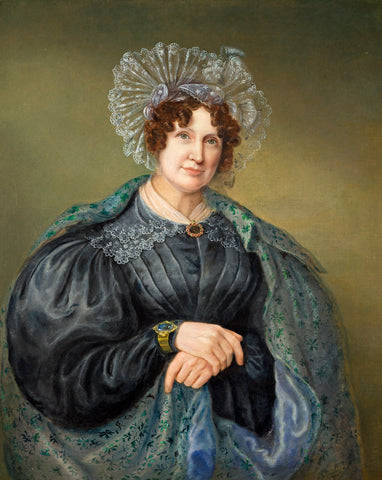
The RWA began its existence in 1844, when - largely at the instigation of pioneering woman artist Ellen Sharples (1769–1849) - the Bristol Academy for the Promotion of Fine Arts was founded.
Ellen Sharples had made her fortune in America, where she and her husband James both produced portraits of all four founding Presidents. When James died in 1811, she returned to Bristol with her artist-daughter, Rolinda, and set about trying to found the kind of regional Academy she had experienced in Philadelphia - the Pennsylvania Academy of the Fine Arts - within her home city.
She spearheaded the fundraising campaign, persuading wealthy individuals to support the project, including both Albert, Prince Consort, and Isambard Kingdom Brunel. When Ellen died in 1849, she left £2000 to the Academy, and this sum, together with an earlier gift from her and money donated by other supporters, enabled the erection of our stunning, purpose-built building, which opened to the public in 1858 as Bristol's first public art gallery.
Thanks to Ellen's influence, equality has been at the heart of our organisation from the outset. Our founding President was John Scandrett Harford, a staunch Quaker and leading abolitionist (personal friend and biographer of William Wilberforce), and we elected our first woman President, Janet Stancomb-Wills, in 1911, long before any other British Royal Academy of Art even allowed women as full members.